
The short answer
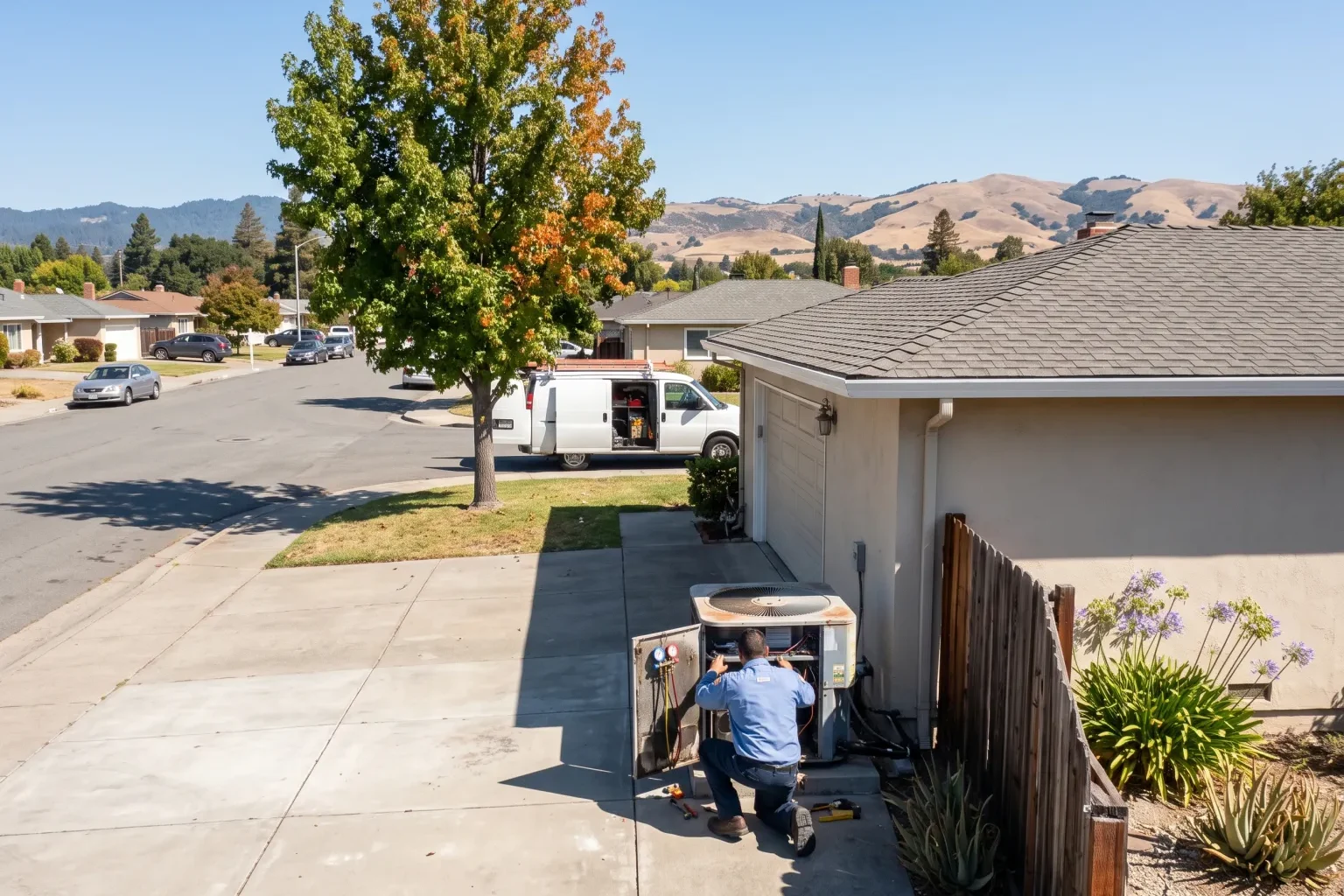
If your AC is blowing warm air, short cycling, making new noises, freezing up, or leaking water, it needs a diagnosis. CoolVantage tests the system to find the real cause, explains your repair or replacement options, and gives you the cost before any work begins.
When your air conditioner quits on a hot afternoon, you want a clear answer about what's wrong and what it will take to fix it. CoolVantage Heating & Cooling repairs central air conditioners and heat pumps for homeowners in San Jose and nearby South Bay cities. Our technicians find the actual cause of the problem, explain it in plain terms, and give you your options before any work starts. This page covers the warning signs to watch for, what we check during a visit, how to think about repair versus replacement, and what shapes the cost of a repair.
Signs your air conditioner needs repair
Most AC problems give some warning before the system stops cooling entirely. The Santa Clara Valley has dry summers, and inland and southern parts of the valley run noticeably hotter than areas near the Bay. A system that limps along in spring can fail once it has to run for long stretches. Call for service if you notice any of these:
If you see ice on the lines or smell burning, turn the system off at the thermostat and leave it off until it has been checked. Running a frozen or overheating system can turn a smaller repair into a bigger one.
- Air from the vents is warm or only slightly cool
- Some rooms stay hot while others cool normally
- The system runs constantly, but the house never reaches the thermostat setting
- The outdoor unit hums but the fan doesn't spin, or the unit doesn't start at all
- The system turns on and off in short cycles
- Grinding, squealing, rattling, or repeated clicking sounds
- Ice on the refrigerant lines or the indoor coil
- Water pooling around the indoor unit, or a drain line that backs up
- A burning or musty smell when the system runs
- The breaker trips when the AC starts
What we check during an AC repair visit
A repair is only as good as the diagnosis. Our technicians don't swap parts until something works. They test the system step by step to find what failed and why. Depending on the symptoms, that usually includes:
Once we know the cause, we'll show you what we found. We'll explain whether it's a one-time failure or a symptom of a larger issue, then walk you through your options.
- Thermostat settings, wiring, and batteries
- Air filter condition and airflow across the indoor coil
- Breakers, the outdoor disconnect, and electrical connections at both units
- Capacitors and contactors, which are common failure points on outdoor units
- Compressor and condenser fan motor operation
- Refrigerant pressures and signs of a leak
- Indoor evaporator coil and outdoor condenser coil, checked for dirt or damage
- Condensate drain line, drain pan, and safety switch
- Blower motor and blower wheel
- Accessible duct connections, checked for obvious leaks or disconnected runs
Repair or replace: how to decide
Most AC problems are worth repairing. A failed capacitor, a clogged drain, or a worn fan motor is a routine fix on a system that otherwise has plenty of life left. Replacement is worth discussing in a few situations: the system is older and a major component like the compressor fails, repairs have become frequent, the system uses an older refrigerant that's harder to service, or the house has never cooled evenly no matter what gets fixed.
If you're considering replacement, a heat pump is worth a look. It cools in summer and heats in winter, which matters if you also have an aging gas furnace. Under Bay Area Air District rules, natural gas furnaces manufactured from 2029 must meet a zero-NOx emission standard. In practice, that points toward heat pumps when a furnace is replaced after that date. These rules don't require you to replace working equipment. They apply only when a furnace or water heater fails or is replaced.
Incentives have changed recently. The federal Energy Efficient Home Improvement Credit covered qualifying heat pumps placed in service before December 31, 2025. It isn't available for new installations after that date. Bay Area homeowners can still check BayREN and their local clean energy provider for current heat pump and electrification incentives. Amounts and availability change with each funding cycle, so we confirm the current offer before including it in a quote. We'll give you an honest read on whether repair or replacement makes more sense for your home, and the decision is yours.
What affects the cost of an AC repair
We can't price a repair until we know what's wrong. These factors make the biggest difference:
Your technician will explain the repair and its cost before starting any work, so you can decide before anything is done.
- The part that failed. Small electrical parts cost far less than a compressor or coil.
- Refrigerant type and amount. A leak has to be found and repaired, and older refrigerants can be more expensive and harder to get.
- Access. Units in tight attics, in crawlspaces, or on rooftops take more time to work on.
- Parts availability. Common parts are often on the truck. Others have to be ordered for your specific model.
- Timing. Visits outside regular hours can cost more.
- Additional damage. A problem left running can damage other components and add to the repair.
How an AC repair visit works
When you contact us, we'll ask what the system is doing, how old it is if you know, and where the indoor and outdoor units are located. That helps the technician come prepared.
Before you call, check three things: the thermostat is set to cool, the filter isn't clogged, and the breaker hasn't tripped. If those check out and the system still isn't cooling, it's time for a diagnosis.
- Schedule: We set a service window and let you know when the technician is on the way.
- Diagnose: The technician asks you about the symptoms, then inspects and tests the system.
- Explain: You get a plain explanation of the problem and your options, with the cost before work begins.
- Repair: With your approval, we complete the repair, using parts from the truck when we have them.
- Test: We run the system to confirm it's cooling properly and check temperatures at the vents.
- Wrap up: We clean up the work area and share any recommendations for keeping the system running well.
AC Repair by city
- AC Repair in CampbellLocal service & repairs
- AC Repair in Los GatosLocal service & repairs
- AC Repair in Monte SerenoLocal service & repairs
- AC Repair in Santa ClaraLocal service & repairs
- AC Repair in SaratogaLocal service & repairs
- AC Repair in CupertinoLocal service & repairs
- AC Repair in MilpitasLocal service & repairs
- AC Repair in SunnyvaleLocal service & repairs
- AC Repair in Los AltosLocal service & repairs
- AC Repair in Mountain ViewLocal service & repairs
- AC Repair in Morgan HillLocal service & repairs
- AC Repair in FremontLocal service & repairs
