
The short answer
A ductless mini-split is a good fit when specific rooms stay too hot or cold, when part of your home has no ductwork, or when you want electric heating and cooling without running new ducts. We size the system to each room, check your electrical panel and outdoor placement, and give you written options before any work begins.
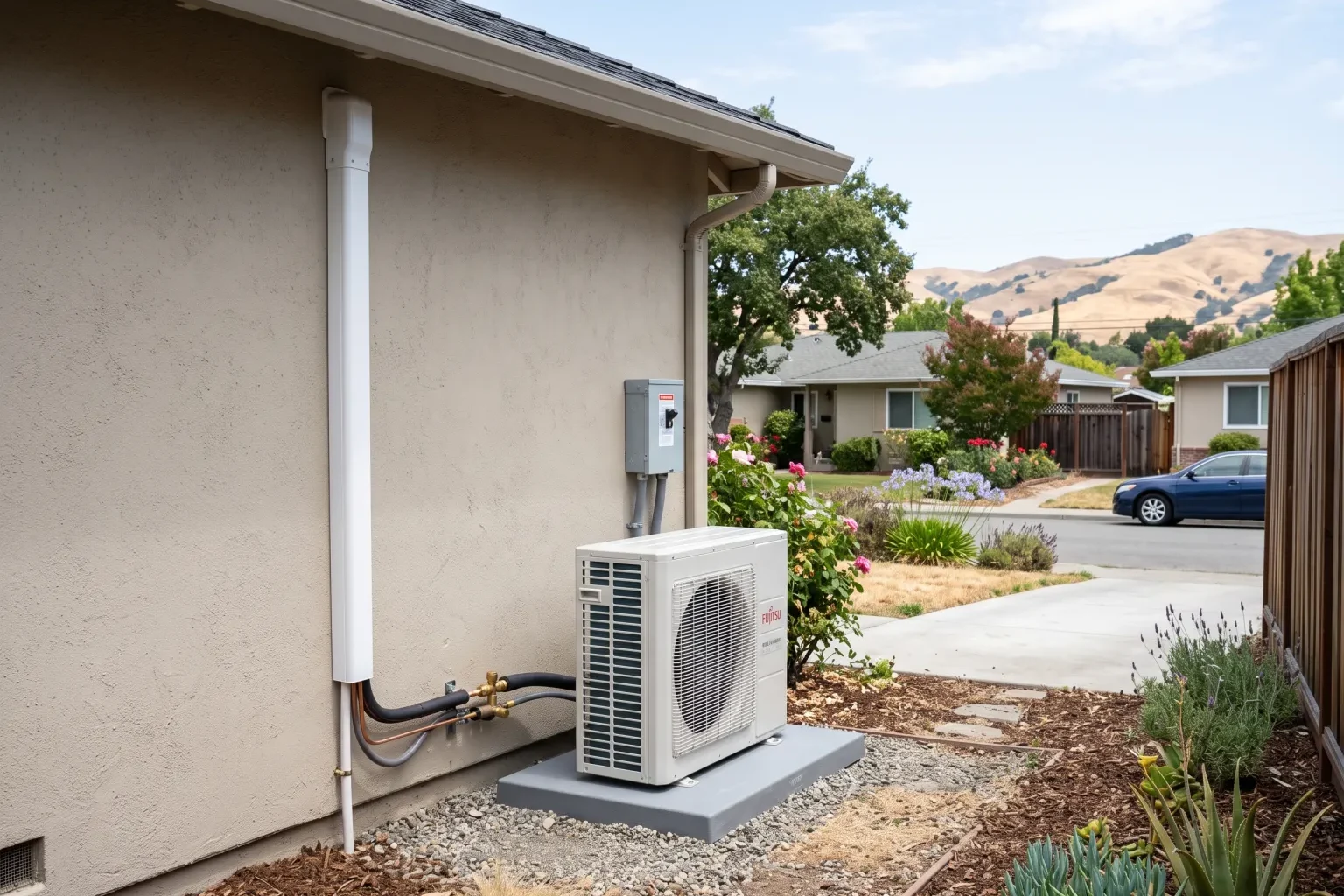
A ductless mini-split heats and cools individual rooms without ductwork. An outdoor heat pump connects to one or more indoor units through a small refrigerant line set that runs through the wall. In San Jose and nearby cities, mini-splits are a common fix for rooms the central system never reaches well. That includes converted garages, additions, upstairs bedrooms that bake in August, and older homes built with wall heaters or no ducts at all. This page explains when a mini-split makes sense, what we look at before recommending one, and how an installation visit works.
Signs a Mini-Split May Be the Right Fit
Most homeowners call us about one specific room, not the whole house. The Santa Clara Valley has dry summers and mild, damp winters, so many homes only need serious cooling a few months a year. Inland and southern parts of the valley run noticeably hotter in summer than areas near the Bay, though, and a single hot room can make a house hard to live in.
If the whole house is uncomfortable, the problem may be the main system or the ducts. In that case we'll tell you, rather than add equipment you don't need.
- One or two rooms stay much hotter or colder than the rest of the house.
- You've added an ADU, garage conversion, or addition that isn't connected to your ductwork.
- Your home has no ducts, or the ducts are undersized, crushed, or squeezed into a cramped attic or crawlspace.
- You rely on window units or portable heaters and want something quieter and permanent.
- Your old wall furnace or electric baseboard heat is failing.
- You want to heat and cool with electricity instead of gas.
What We Check Before Recommending a System
We size a mini-split to the actual space. Square footage alone isn't enough to go on, so during the assessment we look at each room and the conditions around it:
We also ask how you use each room. A home office used during the day and a bedroom used at night are often better served by separate zones, each with its own controls.
- Room size, ceiling height, window area, and sun exposure.
- Insulation and air leakage, especially in older homes and attic conversions.
- Where the indoor units can mount so air reaches the room without blowing directly on beds or seating.
- A practical route for the line set and condensate drain, and how it will look from outside.
- A level, accessible spot for the outdoor unit with proper clearance, placed with noise near bedrooms and neighbors' windows in mind.
- Your electrical panel's capacity and whether a new circuit is needed.
- Whether a single-zone or multi-zone system fits better.
Repair, Replace, or Add On: Your Options
If you already have a mini-split that isn't keeping up, it may not need replacing. Many problems are repairable, including dirty filters and coils, a clogged condensate line, a refrigerant leak at a fitting, and a failed sensor or control board. Replacement starts to make sense in a few situations: the system is older and repairs keep adding up, the compressor has failed, the system uses an older refrigerant that is harder to service, or the unit was the wrong size from the start.
If you have central heating and air, a mini-split can supplement it in a problem area without replacing anything. Many homeowners add a single zone for an upstairs bedroom or an addition and keep their existing system for the rest of the house.
If your gas furnace is nearing the end of its life, there's a rule change to plan around. Under Bay Area Air District rules, natural gas furnaces manufactured from 2029 must meet a zero-NOx emission standard, which in practice points homeowners toward heat pumps for replacements after that date. The rules don't require you to replace working equipment. They apply only when a furnace fails or is replaced. That gives you time to decide between a ducted heat pump, ductless units, or a mix of both.
What Affects the Cost
Every mini-split project is priced to the home. These are the main factors that move the cost up or down:
Incentives can offset part of the project. The federal Energy Efficient Home Improvement Credit applied only to qualifying heat pumps placed in service before December 31, 2025, so it isn't available for new installations. Bay Area homeowners can still check BayREN and their local clean energy provider for heat pump and electrification incentives. Amounts and availability change by funding cycle, so we confirm the current offer before including it in a quote.
- How many zones and indoor units you need.
- Indoor unit style: wall-mounted, ceiling cassette, floor console, or concealed ducted.
- Equipment capacity and efficiency rating.
- Line set length and route difficulty, including runs through finished walls, multiple floors, or stucco.
- Electrical work, such as a new dedicated circuit or a panel upgrade.
- How the outdoor unit is mounted: ground pad, wall bracket, or roof.
- Permit requirements in your city.
- Removal of old equipment, such as window units or wall furnaces.
How an Installation Visit Works
We keep the process straightforward so you know what's happening at each step:
A single-zone system is often completed in one day. Multi-zone systems, or jobs that need electrical upgrades, may take longer, and we'll give you a realistic timeline up front.
- Assessment: A technician walks the rooms with you, takes measurements, and checks your electrical panel and outdoor placement options.
- Written proposal: You get equipment options, indoor unit locations, and line set routing in writing, along with what's included and what isn't.
- Installation: We protect floors and furniture, mount the indoor and outdoor units, make and seal the wall openings, run the line set and drain, and complete the electrical connections.
- Startup and testing: We pressure-test and evacuate the refrigerant lines, set the charge, and check airflow, temperatures, and drainage.
- Walkthrough: We show you how to use the remote or app, set schedules, and clean the filters.
