
The short answer
If your furnace needs frequent repairs, heats unevenly, or has a cracked heat exchanger or other safety problem, replacing it is often the better choice. We inspect the whole system first and explain your options, including gas furnaces and heat pumps, so you can choose based on your home, your budget, and current Bay Area rules.
A furnace usually gets attention only when it stops working on a cold night, but a replacement goes better when you have time to think it through. In the Santa Clara Valley, winters are mild and damp rather than harsh, so many homes run their furnaces for months at modest loads. That changes what size and type of system makes sense. CoolVantage Heating & Cooling helps homeowners in San Jose and nearby cities decide whether a furnace needs repair or replacement, compare gas furnaces with heat pumps, and get a new system installed cleanly and correctly.
Signs You May Need a New Furnace
Some furnace problems are simple fixes. Others point to a system near the end of its useful life. A single symptom rarely settles the question, but several together are a good reason to have the furnace evaluated before it fails completely.
Because South Bay winters are mild, a struggling furnace can limp along for a long time without anyone noticing. Rising gas bills or rooms that never quite warm up are often the first clues.
- Repairs are becoming frequent, or the same part keeps failing
- Some rooms stay cold while others get too warm
- The furnace short-cycles, turning on and off often without finishing a heating cycle
- Banging, rattling, squealing, or booming sounds at startup
- A yellow or flickering burner flame instead of a steady blue one
- Soot, rust, or moisture around the unit or vent connections
- A carbon monoxide alarm has gone off, or household members feel headaches or nausea when the heat runs
- Gas use has climbed even though your habits have not changed
What We Check Before Recommending Anything
We don't recommend a replacement based on the age of the unit alone. A technician looks at the furnace and the system around it, because ductwork, venting, and controls all affect how well any new equipment will perform. If a repair makes sense, we'll tell you.
If we find a safety issue, such as a cracked heat exchanger or a venting problem that could let combustion gases into the home, we'll show you what we found and explain why it matters.
- Heat exchanger condition and signs of cracks or corrosion
- Burners, ignition system, and flame quality
- Venting and flue connections, including draft and clearances
- Gas supply connections and shutoff
- Blower motor, belts, and electrical components
- Air filter, return air paths, and overall airflow
- Ductwork condition, leaks, and insulation in attics or crawlspaces
- Thermostat operation and placement
- Whether the current furnace is properly sized for the home
Repair, Replace, or Switch to a Heat Pump
When a furnace is in decent shape and the problem is limited to a part like an igniter, flame sensor, or blower motor, repair is usually reasonable. When the heat exchanger is damaged, major components are failing, or repairs are adding up, replacement tends to make more sense.
If you replace, you generally have two paths. A new gas furnace keeps your current setup and is often the simplest swap. A heat pump provides both heating and cooling with electricity, which can be a good match for the valley's mild winters and hot inland summers, especially if you also need air conditioning.
Bay Area air rules matter here. Under the Air District's appliance rules, natural gas furnaces manufactured from 2029 onward must meet a zero-NOx emission standard, which in practice points homeowners toward heat pumps when a furnace is replaced after that date. The rules do not require you to replace a furnace that is still working. They apply only when equipment fails or is replaced. If your furnace is aging, it's worth thinking now about which direction you'd want to go.
On incentives: the federal Energy Efficient Home Improvement Credit covered qualifying heat pumps placed in service before December 31, 2025, and is not available for new installations after that date. Bay Area homeowners can still check BayREN and their local clean energy provider for current heat pump and electrification incentives. Those offers change by funding cycle, so we confirm what's available before including it in a quote.
What Affects the Cost of a New Furnace
Every home is different, so we quote after seeing the system rather than guessing. These are the main factors that move the cost up or down:
- Type of equipment: gas furnace, heat pump, or a dual-fuel combination
- Efficiency level and features such as variable-speed blowers or multi-stage heating
- Correct sizing based on your home's square footage, insulation, windows, and layout
- Condition of existing ductwork and whether repairs, sealing, or new runs are needed
- Venting changes, such as the venting a high-efficiency furnace requires
- Electrical upgrades, which are more common when switching to a heat pump
- Location of the unit, including tight attics, closets, or crawlspaces
- Permits and inspections required by your city
- New thermostat or zoning controls
How a Furnace Installation Visit Works
First, a technician visits your home to inspect the current system, take measurements, and ask how the house heats and cools now, including which rooms are uncomfortable. We'll go over repair and replacement options and answer questions about gas versus electric equipment.
Next, we provide a written quote that spells out the equipment, the work involved, and any duct, venting, or electrical changes. If incentives may apply, we'll note what we've confirmed.
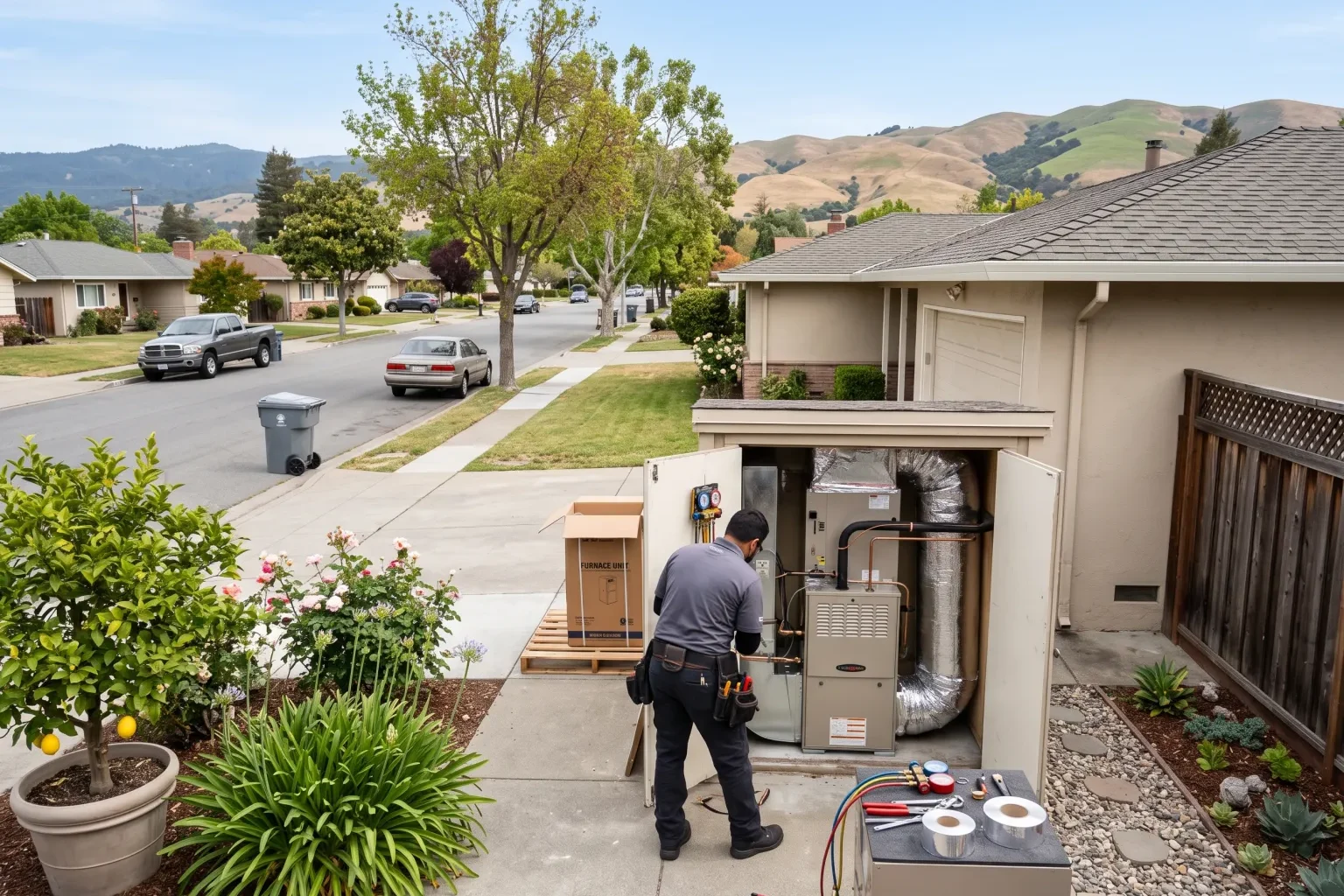
On installation day, the crew protects floors and work areas, disconnects and removes the old unit, and installs the new equipment along with any needed venting, gas, electrical, or duct work. Most straightforward replacements are finished in a day. Larger changes, such as converting to a heat pump, can take longer.
Before we leave, we test the system, check safety controls and airflow, and walk you through the thermostat and filter changes. We also help schedule the city inspection when one is required.
