
The short answer
If your home has lingering dust, musty smells, stuffy rooms, or indoor allergy symptoms, your HVAC system may be part of the problem. We inspect filters, coils, ducts, humidity, and ventilation, fix what is causing the issue, and only recommend added equipment when it will make a real difference.
Indoor air quality is about what you breathe at home: dust, pollen, smoke, humidity, odors, and the gases that can build up in a closed-up house. Your heating and cooling system moves air through every room, so it has a lot to do with whether your home feels fresh or stale. CoolVantage Heating & Cooling inspects, repairs, and upgrades the parts of your HVAC system that affect air quality for homeowners in San Jose and nearby cities. We explain what we find in plain terms so you can decide what is worth doing and what can wait.
Signs Your Home Needs an Air Quality Check
Poor indoor air quality rarely shows up as one obvious problem. It usually appears as small annoyances that build over time. The Santa Clara Valley has dry summers that can bring more dust and pollen indoors. Its mild, damp winters can leave some homes feeling stuffy or musty when the windows stay shut. Watch for these signs:
Some warning signs need faster action. If you smell gas or a carbon monoxide alarm goes off, leave the house and contact your gas utility or emergency services first. Once the home is safe, we can inspect the furnace and its venting.
- Dust settling on furniture soon after you clean
- Allergy or sinus symptoms that seem worse inside than outdoors
- Musty, stale, or burning smells when the system starts
- Dust or dark streaks around supply registers
- Rooms that feel stuffy, overly dry, or clammy
- Condensation on windows, or mold near vents or the indoor unit
- Filters that clog quickly, or a filter nobody remembers changing
- Smoke odors that hang around indoors long after outdoor air clears
What We Check During an Indoor Air Quality Visit
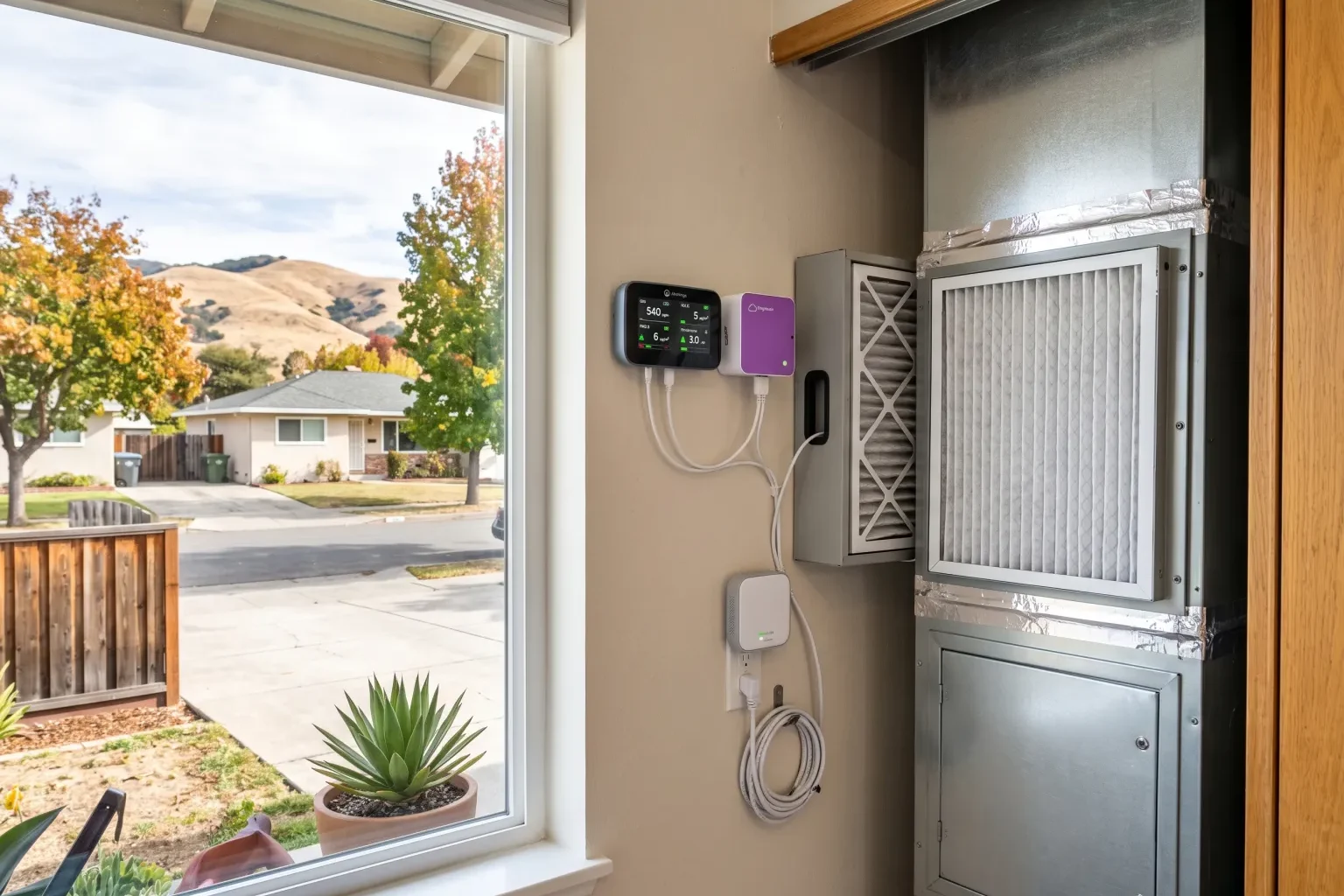
A good air quality visit looks at the whole system, not just the filter. Many problems come from places homeowners can't easily see, such as a leaky return duct in the attic or a dirty coil inside the air handler. Here is what we inspect:
We show you what we find, with photos when it's practical. We also separate the issues that affect health and comfort from the ones that are minor or cosmetic.
- Air filter: size, fit, and rating, and whether air is slipping around it through gaps
- Blower and blower compartment: dust buildup, debris, and airflow
- Evaporator coil and condensate drain pan: dirt, standing water, or microbial growth
- Accessible ductwork: leaks, disconnected or crushed sections, and debris inside
- Return air: whether returns are blocked or undersized, which can pull air in from the attic, garage, or crawlspace
- Indoor humidity and how well your system manages it
- Ventilation: bathroom and kitchen exhaust, and whether the house gets enough fresh air
- Gas furnace safety: venting, visible parts of the heat exchanger, and carbon monoxide alarms
- Existing air cleaners, UV lights, or humidifiers, to confirm they work as intended
Repair, Upgrade, or Replace: Your Options
We start with fixes, because many air quality problems come from basic issues. A filter that fits properly and is sealed in its slot can do more than an expensive add-on with air leaking around it. Cleaning a dirty coil, clearing a clogged condensate drain, sealing leaky duct joints, and repairing a damaged return often solve dust and odor complaints on their own. We recommend duct cleaning only when we actually find debris, pest activity, or contamination inside the ducts.
If the basics are in good shape and you still want cleaner or more comfortable air, we can talk about upgrades. Options include a deeper media filter cabinet, a whole-house air cleaner, a humidifier for dry winter air, a dehumidifier for damp homes, or a balanced ventilation system that brings in filtered fresh air. We'll explain how each one fits your home and how much upkeep it needs. We avoid products that produce ozone.
Sometimes replacement makes more sense. That can happen when ducts are badly damaged or poorly designed, or when an aging furnace has venting or safety concerns. If a furnace replacement is on the table, keep the Bay Area Air District rules in mind. Gas furnaces manufactured from 2029 must meet a zero-NOx standard, which in practice points many homeowners toward heat pumps. The rules don't force you to replace working equipment. They apply only when a furnace fails or you choose to replace it. The federal heat pump tax credit ended for installations after 2025. BayREN and your local clean energy provider may offer incentives, and we confirm the current offer before including it in any quote.
What Affects the Cost
Every home is different, so we give you a written quote after the inspection rather than guessing up front. These are the main factors that shape the price:
- What the problem turns out to be: a filter fix and a duct replacement are very different jobs
- How easy it is to reach the equipment and ducts, including tight attics and crawlspaces
- How much ductwork needs sealing, repair, or replacement
- The type of filtration, humidity control, or ventilation equipment you choose
- Whether electrical work or new wall or ceiling openings are needed
- The age and condition of your current system
- Ongoing upkeep, such as replacement filters, media, or bulbs
How a Visit Works
First, we ask about what you've noticed: which rooms, what times of year, and any smells, dust, or symptoms. That conversation points us toward likely causes.
Next, a technician inspects your system and the areas listed above, checks humidity, and looks at ventilation and safety items. Then we walk you through what we found and lay out your options, from simple fixes to larger upgrades, with a written quote. You decide what to do. If you approve the work, we can often handle smaller repairs during the same visit. Larger projects get scheduled for a time that works for you, and we review the results with you when the work is done.
