
The short answer
Duct cleaning is worth it when you can see debris, smell mustiness, have had pests or recent construction, or are moving into a home with an unknown history. On every visit we inspect the ducts first and then recommend cleaning, sealing, repair, or replacement based on what we actually find.
Your ductwork carries every bit of air your furnace, heat pump, or air conditioner delivers, so whatever is inside it ends up in the rooms you live in. In San Jose and nearby cities like Santa Clara, Campbell, Milpitas, and Cupertino, the dry summers let fine dust build up in ducts, and the mild, damp winters can leave moisture in poorly sealed runs, especially in attics and crawlspaces. Most homes don't need duct cleaning on a fixed schedule. It makes sense when there's a specific problem. Part of our job is telling you plainly whether cleaning will help or whether something else is going on.
Signs Your Ducts May Need Cleaning
Dust on furniture by itself doesn't mean your ducts are dirty. Every home gets dusty. These signs point more directly to a problem inside the duct system:
- Visible dust, lint, or debris blowing out of supply registers when the system starts
- Gray buildup on the grilles or on the duct walls just behind them
- A musty or stale smell that gets stronger when the heat or AC runs
- Evidence of rodents, insects, or birds in the attic, crawlspace, or ductwork
- Recent remodeling, drywall work, or flooring sanding, especially if the system ran during the work
- Suspected mold growth on duct surfaces or around the indoor coil
- A home you just bought, where you don't know how the ducts were maintained
What We Check During an Inspection
Before we recommend cleaning anything, we look at the whole air path from the return grille to the last supply register. Dirty ducts are often a symptom of something else, like a leaky return pulling in attic dust or a filter that doesn't fit its slot.
If we find something that cleaning won't fix, such as a disconnected run or damaged insulation, we show you and explain your options before doing any work.
- Return grilles and the return duct, where most debris enters the system
- Filter size, fit, and condition, including gaps that let air bypass the filter
- Supply trunk and branch ducts, using a camera where we can't reach by hand
- Duct connections, joints, and boots for gaps, crushed sections, or disconnections
- Insulation on attic and crawlspace ducts, including tears and moisture damage
- The blower and indoor coil, since a dirty coil or blower wheel will re-soil clean ducts
- Signs of moisture, pest activity, or possible mold that need more than cleaning
Clean, Repair, or Replace: Choosing the Right Fix
Cleaning is the right call when the ducts are structurally sound but have dust, construction debris, or pest residue inside. We use negative-pressure equipment and agitation tools to loosen debris and pull it out of the system rather than push it into your living space. We also clean registers and grilles and can clean the blower and coil when they need it.
Repair makes sense when most of the system is in good shape but specific sections have problems. Common repairs include resealing leaky joints with mastic, reconnecting runs that have pulled apart, replacing a crushed or torn section of flex duct, and fixing damaged insulation. Sealing leaks on the return side is often the most useful fix, because it stops attic or crawlspace dust from being drawn into the system in the first place.
Replacement is worth considering when flex duct is brittle, sagging, or torn in many places, when insulation is badly degraded, when there's extensive contamination, or when the layout simply doesn't deliver enough air to some rooms. In older homes, replacing tired ductwork can do more for comfort and air quality than repeated cleaning. If you're also planning a switch to a heat pump, it can be a good time to check that duct sizing matches the new equipment, since heat pumps often run longer at lower airflow than older furnaces.
We'll lay out each option that fits your situation, what it addresses, and what it doesn't, so you can decide without pressure.
What Affects the Cost of Duct Cleaning
We give you a clear quote after the inspection, because the right scope depends on your home. The main factors are:
- The size of the home and the number of supply and return registers
- Where the ducts run, since tight attics and low crawlspaces take more time
- The type of duct, as flex duct needs gentler handling than sheet metal
- How much debris is present and whether there's pest or construction residue
- Whether the blower, coil, or other equipment also needs cleaning
- Any sealing, repair, or insulation work recommended after the inspection
How a Duct Cleaning Visit Works
When we arrive, we ask what prompted the call and what you've noticed, like smells, dust, or rooms that never get comfortable. Then we inspect the system and walk you through what we found, using photos or camera footage when it helps.
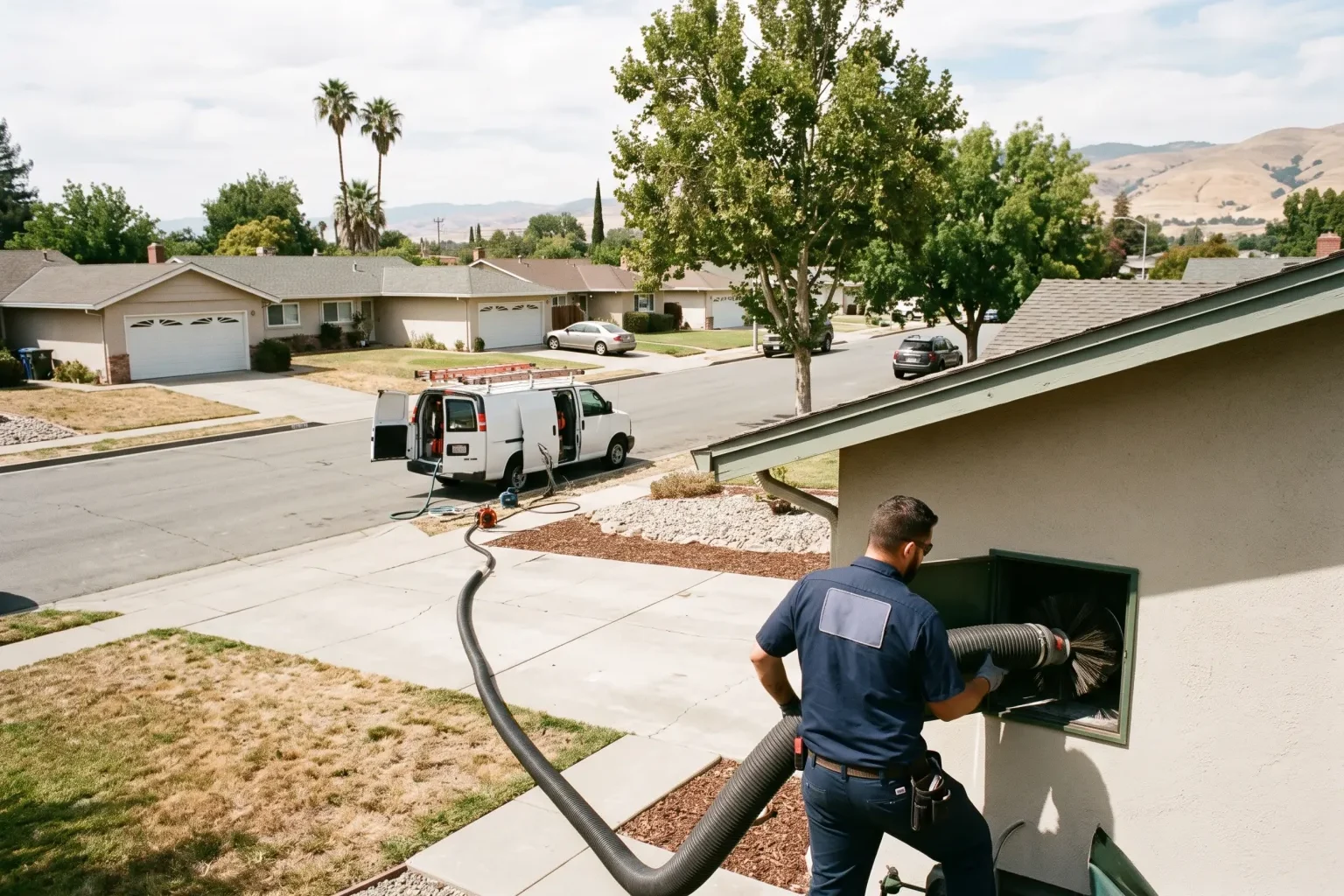
If cleaning is the right fix, we protect floors and furniture near the work area, seal off registers, and connect our equipment to the system. We work through the ducts section by section, then clean the grilles and registers. If needed, we clean the blower and coil and install a properly fitted new filter.
Before we leave, we run the system, check airflow at the registers, and point out anything that needs attention later, such as a section of duct that's starting to wear. Most visits take part of a day, though larger homes or added repairs can take longer. We'll give you a realistic time estimate up front.
